
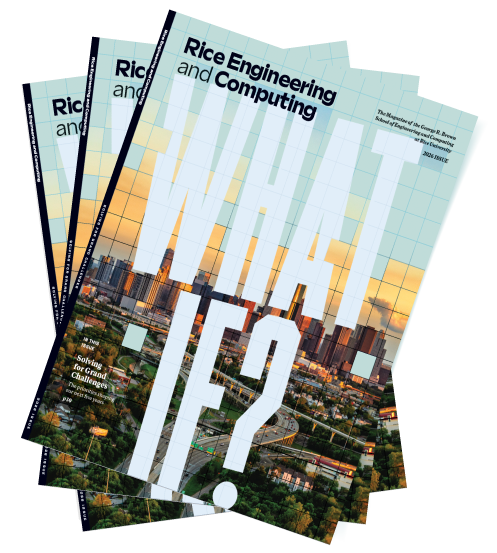
The 2026 issue of Rice Engineering and Computing Magazine is here!
This issue explores the ideas, people and partnerships shaping what comes next. Inspired by the momentum behind Vision 2030 — our school’s new strategic plan — this year’s stories highlight how our community is taking on big challenges in health and well-being, sustainability and resilience, and computing and AI. Inside, you’ll find a closer look at the research, collaborations and bold thinking driving Rice Engineering and Computing forward.
Rice Engineering and Computing Welcomes
19 New Research and Teaching Faculty Members
Rice University’s George R. Brown School of Engineering and Computing is growing and excited to welcome new faculty. To further demonstrate our commitment to excellence in research, teaching, and mentorship, the school has added 19 new research and teaching faculty members this academic year.
This cohort—spanning eight of the school’s nine departments—expands our research and teaching expertise in the key focus areas of health and well-being, computing and AI and sustainability and resilience. The growth also aligns closely with Rice’s ambitious 10-year strategic plan to become a premier research and teaching institution.
All new faculty started at Rice on July 1, 2025, except where otherwise indicated.
 Research Expertise: Uses high-throughput computational approaches to design and discover materials for photovoltaics and quantum science.
|
 Research Expertise: Designs computing systems with enhanced visual and spatial features for mobile and extended reality.
|
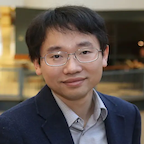 Research Expertise: Develops membrane and electrochemical separation approaches for sustainable water treatment.
|
 Research Expertise: Builds mathematical and statistical models for biomedical problems and flood prediction.
|
 Research Expertise: Solves theoretical problems related to differential privacy and learning-augmented algorithms.
|
 Research Expertise: Examines reliable control of complex engineering systems and neural networks.
|
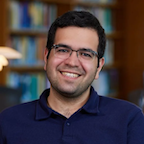 Research Expertise: Explores machine learning theory, game theory, and mechanism design.
|
 Research Expertise: Creates wireless technologies with sustainable AI systems for low-power sensing.
|
 Research Expertise: Focuses on brain-inspired physical AI and computer architecture.
|
 Research Expertise: Applies immunoengineering and molecular diagnostics to treat cancers and brain injury.
|
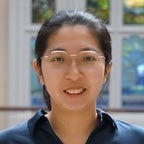 Research Expertise: Utilizes AI/ML to identify biomarkers for aging and enhance healthcare efficacy.
|
 Research Expertise: Engineers biomaterial-based drug delivery for vaccines and women's health.
|
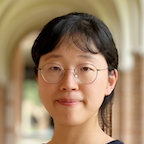 Research Expertise: Formulates computational methods to quantify hazard resilience of urban infrastructure.
|
 Research Expertise: Develops electrochemical materials to control energy storage processes.
|
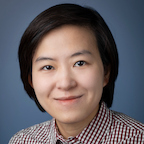 Research Expertise: Builds machine learning methods for large-scale health sciences and neuroimaging.
|
 Focus Areas: Workplace communication strategies tailored for engineering students.
|
 Focus Areas: Sustainable water purification and sustainable design courses.
|
 Focus Areas: Engineering project management and developing high-performing teams.
|
 Focus Areas: Linear regression and statistical methods for data science applications.
|