
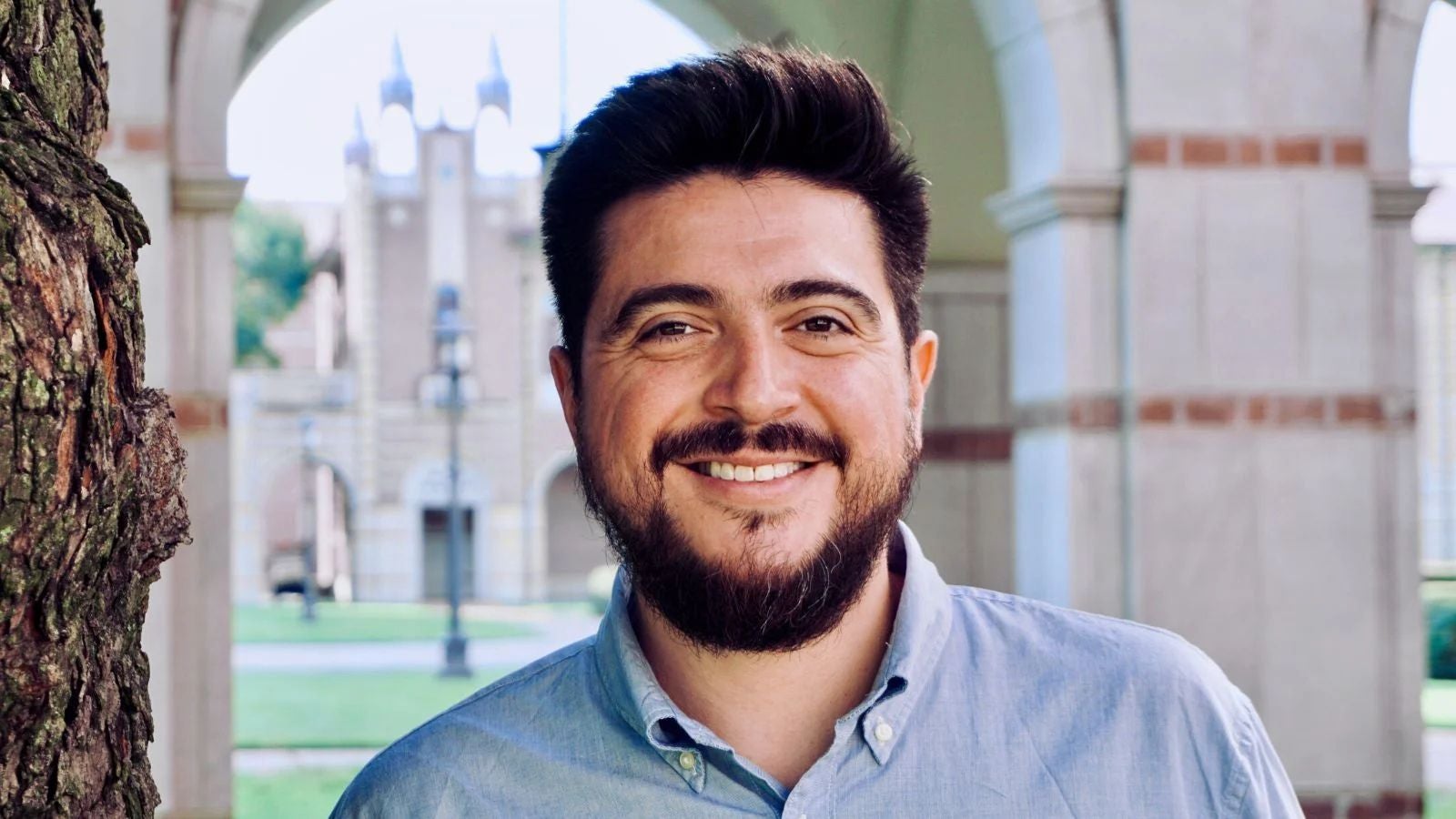
The George R. Brown School of Engineering and Computing at Rice University has announced the promotion of Rodrigo Ferreira to Associate Dean for Technology and Responsibility, effective March 1, 2026.
In this newly created role, Ferreira serves as a strategic partner to the Dean of the School of Engineering and Computing and leads the school’s efforts to integrate responsibility into its research, teaching, and service. The creation of this position underscores the school’s mission of Solving for Greater Good and its commitment to ethics, policy, and human-centered engineering design.
“In this age of unprecedented development of technology—from synthetic biology to generative AI—we have a moral obligation to expand our focus beyond technical innovation to consider its impact on society,” said Luay Nakhleh, William and Stephanie Sick Dean of the George R. Brown School of Engineering and Computing. “Rodrigo Ferreira’s appointment will ensure that Rice is at the forefront of ethical innovation, which is a mission-critical component of the strategic vision of Rice Engineering and Computing.”
Ferreira is an assistant teaching professor in the Department of Computer Science, where he is responsible for the ethics in computer science and AI curricula. He also holds a courtesy appointment in the Department of Philosophy and is a member of Rice University’s AI Advisory Committee. As a faculty scholar at the Baker Institute for Public Policy, he leads research on AI Policy and Governance and helps drive international collaborative policymaking.
As the Associate Dean for Technology and Responsibility, Ferreira will partner with school leadership to embed responsibility cohesively into the curriculum and student programming across the School of Engineering and Computing. In addition to incorporating ethics into undergraduate experiential learning, he will expand graduate education with offerings centered on technology, ethics, and policy—preparing the next generation of engineering and computing leaders to anticipate and address societal impacts of technological development.
“At Rice, our goal is not only to help prepare students as the next generation of technical experts and leaders in their field, but also to equip them with the critical understanding and compassion that is needed to confront today’s social challenges,” said Ferreira. “It is essential to think of responsibility not only as a form of accountability or technical problem-solving, but also as foresight and openness to collaborate creatively to help solve the problems faced by communities and environments around the world today.”
Beyond the Rice campus, Ferreira will develop cross-institutional academic engagement activities to advance Rice's leadership in the responsible technology space and reinforce the importance of interdisciplinary collaboration.
He will cultivate partnerships across Rice and with other institutions for joint events that promote responsible technology, such as the Human Flourishing in the Age of AI conference sponsored by the School of Engineering and Computing and the Department of Philosophy, to be held at the Rice Global Paris Center June 3-5, 2026.
The creation of the Associate Dean for Technology and Responsibility role is a critical step in highlighting the role of academia in guiding ethics in technology.
“The School of Engineering and Computing is one of very few schools in the United States and around the world that is expressing this institutional level of commitment to the multidisciplinary work responsible technology entails,” said Ferreira. “We are setting an example of the creative program-building that is urgently needed in this area.”