
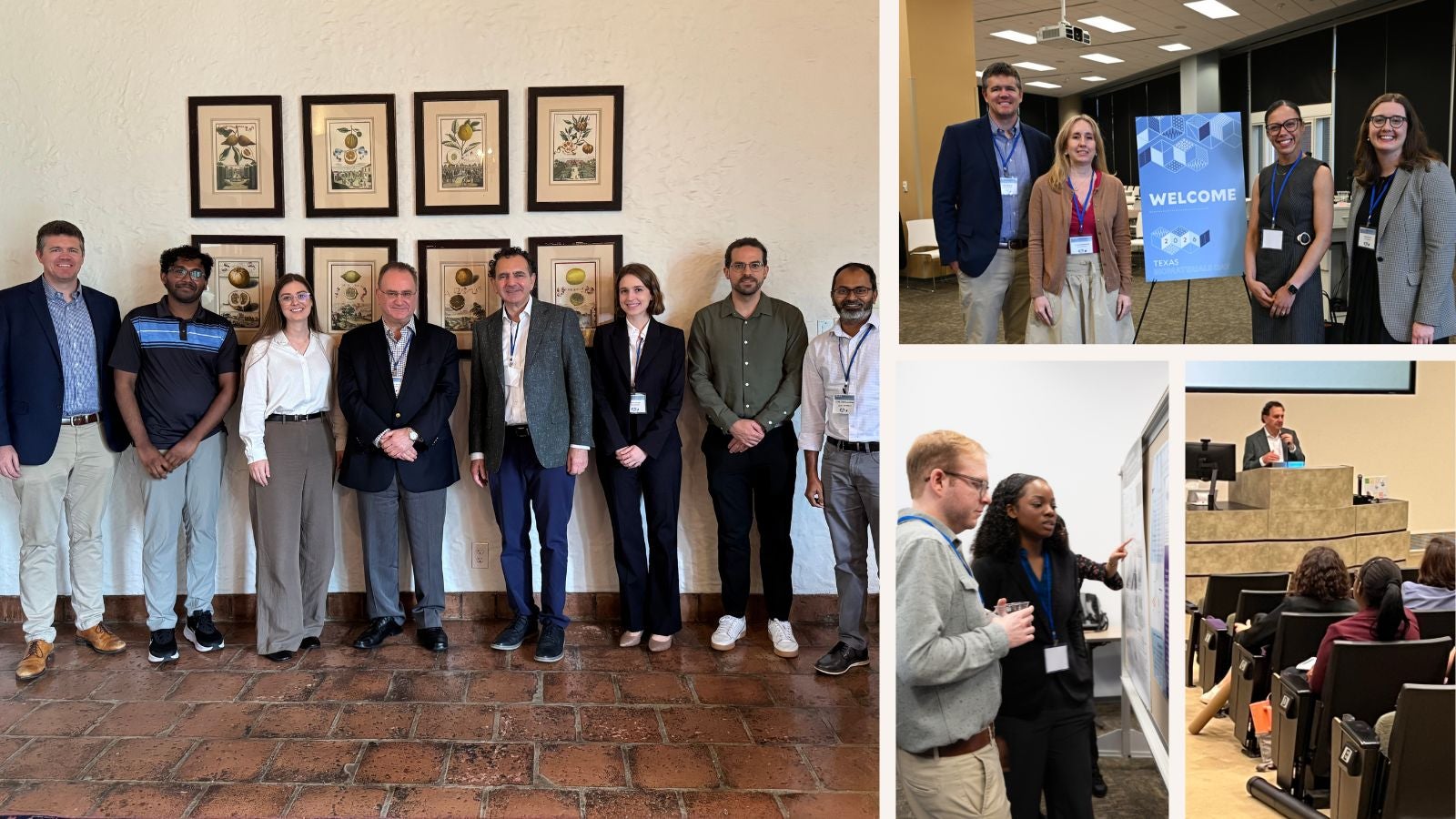
Texas Biomaterials Day drew researchers from all corners of the region to celebrate innovations in biomaterials at Rice University’s BioScience Research Collaborative on April 10, 2026.
Hosted by the George R. Brown School of Engineering and Computing’s Department of Bioengineering, Texas Biomaterials Day brought nearly 200 scholars from 15 regional universities to the Texas Medical Center, where Rice Bioengineering has a long history of innovation in biomaterials.
The one-day symposium, organized by Rice bioengineering faculty members Amanda Nash, Kevin McHugh and Kelsey Swingle, was designed to strengthen the regional community of bioengineers and expose students to groundbreaking biomaterials research. Created by the Society for Biomaterials, Biomaterials Days are held annually in regions across the United States.
“As a global leader in the field, our goal in hosting Texas Biomaterials Day was to showcase and catalyze the immense talent in the region, ensuring that the next wave of medical breakthroughs is engineered right here in Texas,” said Cynthia Reinhart-King, department chair and the John W. Cox Chair of Bioengineering. “By anchoring this network, we are able to leverage our department’s deep expertise to turn the ongoing research in the region into a global standard for clinical impact.”
The symposium featured 26 talks highlighting the latest innovations in biomaterials research, including a keynote, nine invited guest speaker sessions and 16 rapid fire talks. More than 100 students presented in the poster sessions.
“With Texas Biomaterials Day, we sought to create an opportunity where faculty, postdocs, graduate students, and undergraduates could share their science and connect with researchers at institutions across the region,” said McHugh. “It was amazing to learn about the cutting-edge biomaterials research happening in the state and meet the next generation of bioengineers who are moving the field forward.”
Dr. Anthony Atala, director of the Wake Forest Institute of Regenerative Medicine and professor at Wake Forest University, served as the keynote speaker. In a talk titled, "Regenerative Medicine: Current Concepts and Changing Trends," Atala shared how his research has transformed clinical care, from cancer therapies to cartilage repair.
As he closed his presentation, he shared historical highlights from medical technology, challenging attendees to push the boundaries of biomaterials innovation. “It is your job to make this technology obsolete,” Atala said.
“Dr. Atala is a pioneer in regenerative medicine, and his presence provided trainees with a firsthand look at the transformative power of tissue engineering,” said Reinhart-King. “His keynote elevated the event to a world-class forum, inspiring our community to pursue the high-impact, moonshot goals that redefine patient care.”
Faculty from nine universities were invited to present talks on their research. Speakers included Kelsey Swingle (Rice University), Cindy Farach-Carson (the University of Texas Health Science Center at Houston), Dany Muñoz-Pinto (Trinity University), Kristin Miller (University of Texas at Dallas), Mykel Green (Tulane University), Qian Yin (University of Texas at Austin), Vivek Kumar (University of Houston), Mary Beth Monroe (Texas A&M University) and Joseph Wenke (University of Texas Medical Branch).
Rapid fire sessions featured five-minute student presentations, with prizes awarded to the top three presenters. Madeline Laude, doctoral student from the University of Texas at Austin, took home first prize; Erin Shen, doctoral student from Rice University, placed second; and Abigail McCollum, doctoral student from Texas A&M University, won third prize. “People’s Choice” poster session awards were presented to Southwestern University undergraduate student Amanda Mejia, Texas A&M University doctoral student Ernest Emmanuel Obeng, and Rice University undergraduate student Eva Qiao.
Texas Biomaterials Day was sponsored by Rice Biotech Launch Pad, Rice University’s Office of Research, Rice University’s Department of Bioengineering, the Department of Biomedical Engineering at the University of Texas at Austin, Corning, Keyence, VWR, and the Society for Biomaterials.