
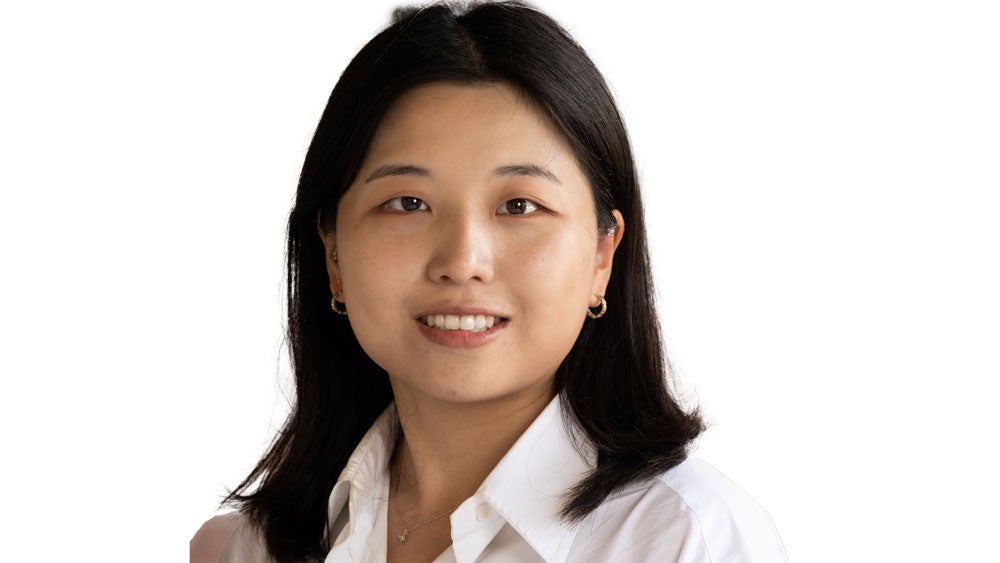
Kun Woo Cho, a postdoctoral researcher in the electrical and computer engineering department, has been appointed to the Texas Instruments/Kilby Endowed Assistant Professor position in the Department of Electrical and Computer Engineering at The University of Texas at Austin. Cho’s research pushes the boundaries of hardware design and next-generation wireless connectivity and has earned an impressive array of honors, including selection as a 2026 Heidelberg Laureate Forum Young Researcher, a 2025 Siebel Scholar, an N2Women Rising Star, and an MIT EECS Rising Star.
Cho’s participation in the Future Faculty Fellows (FFF) program at Rice University’s George R. Brown School of Engineering and Computing was instrumental in preparing her for the new role. Launched in 2019, FFF helps advanced Ph.D. students and postdoctoral researchers to successfully navigate the competitive tenure-track academic market through workshops, strategic panel discussions, application review and interview preparation.
Cho credited the program’s structure and hands-on mentorship as key to her success, specifically noting the dedication of Kamisha Escoto, who provided constructive feedback on every iteration of her application statements and prepared her for interviews.
"The FFF program got me started on my application materials early and helped me thoroughly prepare for interviews, for which I'm really grateful," Cho said. "The early start gave me enough breathing room to go through two or three rounds of revisions while working on a scientific publication, and the mock interviews taught me how to confidently handle tough questions."
A Village Built on Mentorship
Cho emphasizes that making the leap to a faculty position requires a deeply supportive community.
"A couple of years ago, a friend told me it takes a whole village to make someone a faculty member," she reflected. "For me, that village was Rice."
Cho expressed gratitude for her postdoctoral advisor, Ashutosh Sabharwal, who guided her through the academic job search and prepared her for the new position. "He didn't just help with statements and interview prep, but he also taught me how to mentor students, think about the bigger picture of research and career, and how to enjoy the process."
She also noted the support of faculty members from Rice’s electrical and computer engineering and computer science departments, including Ashok Veeraraghavan, Edward Knightly, Taiyun Chi, Chris Jermaine, T.S. Eugene Ng. "My experience at Rice shaped the kind of mentor I hope to become," she added.
Redefining the Future of Wireless Infrastructure
Cho’s research sits at the intersection of wireless communications, radar systems, and hardware prototyping for next-generation (5G/6G/NextG) networks. Rather than treating the physical environment as an obstacle for wireless signals, her work introduces software-controlled hardware to actively shape signal propagation.
By bridging computer science and electrical engineering, her lab designs intelligent, energy-efficient systems that make global communications faster and more reliable. Cho has developed key innovations including:
- Smart Surfaces: Hardware deployed on buildings and roadsides to manipulate, reflect, or refract 5G/6G spectrum bands in real time without power-intensive digital conversion.
- EyeDAR: A low-power millimeter-wave radar sensor for autonomous vehicles and robots that improve perception in harsh weather conditions.
- Massive IoT Scaling: Machine learning frameworks designed to manage dense IoT ecosystems more efficiently.
A defining feature of Cho’s work is its emphasis on end-to-end realization—moving beyond simulations to physical fabrication, hardware integration, and field testing.
From Mentee to Mentor
As she establishes her lab at UT Austin, Cho plans to continue pushing the boundaries of knowledge in these areas while building a collaborative, high-impact research team. Her immediate priority is cultivating an environment where students can thrive.
"In the short term, I want to focus on building my group at UT Austin by being a good mentor and teacher," Cho says. "I hope to add value to my department, the broader research community, and the local area."
This systematic approach to establishing her independent research career mirrors her personal philosophy of discipline and endurance. Outside the lab, Cho is an avid long-distance runner who logs over 30 miles a week—a routine she maintained throughout her job search.
"Hitting that weekly goal gave me a consistent sense of accomplishment and control during a time of uncertainty," Cho explains. "It helped me secure an incredible position at UT Austin while achieving a personal running record. I take that as a good sign for what’s ahead."