
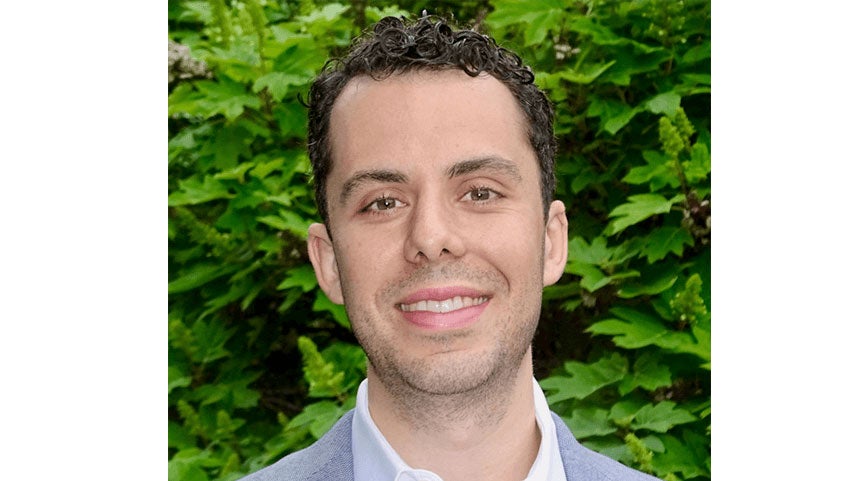
James Doss-Gollin, assistant professor of civil and environmental engineering at Rice University’s George R. Brown School of Engineering and Computing, has received the prestigious Faculty Early Career Development Program (CAREER) award from the National Science Foundation.
“This five-year grant award recognizes James’s leadership in advancing urban flood resilience through physics-informed machine learning models and will accelerate his research focused on helping cities better understand and manage flood risk,” said Jamie Padgett, chair of the Department of Civil and Environmental Engineering at Rice.
Flooding is the costliest natural hazard in the United States, damaging homes, critical infrastructures, and transportation networks, sometimes with deadly consequences. The threat continues to grow as climate change intensifies rainfall from hurricanes and severe storms. At the same time, rapid urbanization replaces absorbent soil and vegetation with impervious surfaces like cement, increasing runoff and flood risk.
Current flood prevention and mitigation strategies often rely on simplified rainfall models that do not accurately capture the complexity and cumulative risks associated with real-world storms. For example, two “100-year storms” can lead to very different levels of flooding depending on rainfall intensity, timing and location, as well as accompanying hazards such as high winds. Scientists’ability to predict and manage these impacts is also limited by the high computational cost of running flood models that simulate both localized stormwater infrastructure and citywide flooding processes.
To address these challenges, Doss-Gollin will use physics-informed machine learning to simulate thousands of realistic storm scenarios and evaluate their effects on communities and critical infrastructure. He has partnered with Harris County Flood Control District, the City of Houston Department of Public Works, and Rice’s SSPEED Center to validate these models for real-world scenarios.
“Houston is an ideal testbed for this work because the city faces both frequent localized flooding that disrupts day-to-day life and the persistent threat of catastrophic hurricane flooding like we saw during Hurricane Harvey,” Doss-Gollin said.
Historically, cities responded to flood threats by building large-scale infrastructures like stormwater drains and detention basins to redirect or store excess water. More recently, cities around the world have adopted green infrastructure initiatives such as bioswales, rain gardens, permeable pavements or coastal barrier systems, which help protect against storm surges, conserve natural ecosystems and offer new recreational spaces.
“We will study how these infrastructure strategies perform individually and in combination under different rainfall-driven flooding events in Houston,” Doss-Gollin said. “Our ultimate goal is to extend these findings to other cities and communities across the country to help them better understand and manage their flood risks.”